The Bee Gees started the second phase of their extraordinary careers with 1975s stellar "Jive Talkin'" (#1 for 2 weeks in 1975) a song that heralded the beginning of their rule as disco masters. They continued their ascent with the equally danceable "You Should Be Dancing" (#1 for 1 week in 1976) and peaked a few years later with their trio of #1 hits from "Saturday Night Fever" - "How Deep Is Your Love" (#1 for 3 weeks in 1977), "Stayin' Alive" (#1 for 4 weeks in 1978), and "Night Fever" (#1 for 8 weeks in 1978). The brothers managed to stay on top of the music world with their next CD, "Spirits Having Flown," which yielded 3 more #1 hits - "Too Much Heaven" (#1 for 2 weeks in 1979), "Tragedy" (#1 for 2 weeks in 1979), and "Love You Inside Out" (#1 for 1 week in 1979). "Greatest" was released in 1979, on the heels of this phenomenal late 70s success. In addition to these great #1 songs, the set includes their two other Top 10s from the period - "Nights on Broadway" (#7 in 1975) and "Love So Right" (#3 in 1976). One of my favorite songs here is "Fanny (Be Tender with My Love)" which only went to #12 in 1976 but is a beautiful ballad worthy of greater attention. The Bee Gees were so huge at the time that they even managed to score a hit on the country chart: "Rest Your Love on Me," the b-side of "Too Much Heaven," peaked at #39 in 1979. I also really enjoy the non-hits, some of which were singles for others. "(Our Love) Don't Throw It All Away," for example, peaked at #9 in 1978 for their brother, Andy Gibb. In addition, two other songs from "Saturday Night Fever" are included: "If I Can't Have You" (#1 for 1 week in 1978 for Yvonne Elliman) and "More Than a Woman" (#32 in 1978 for Tavares). I particularly like "If I Can't Have You": their version adds some fantastic urgency to the lyrics - a really great song. Finally, some top-notch album cuts are here: "Love Me," "You Stepped Into My Life," and "Children of the World" (from 1976's "Children of the World"); "Spirits (Having Flown)" (from 1979's "Spirits Having Flown"); "Wind of Change (from 1975's "Main Course"). I'm really surprised that "Love Me" was never released as a single, as it sounds like a sure-fire hit. I really love "Greatest," and the Bee Gees have been enjoying a critical and popular rediscovery in recent years; they were even inducted into the Rock & Roll Hall of Fame in 1997. This collection, however, has gone out of print and been replaced by the subsequent "The Bee Gees - Their Greatest Hits: The Record," a 2-disc set with 40 songs. That collection comprises hits from their entire career, from "New York Mining Disaster" (#14 in 1967) to "Alone" (#28 in 1997). However, "Greatest" is much more focused on their disco era success and thus sounds very cohesive. -AMAZON.COM
DOWNLOAD
Showing posts with label 70'S. Show all posts
Showing posts with label 70'S. Show all posts
Wednesday, April 22, 2009
048 BEE GEES-GREATEST


047 EMERSON,LAKE AND PALMER-TARKUS
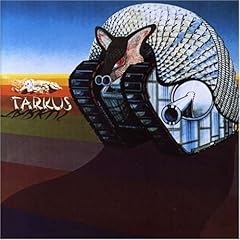
When it comes to Emerson Lake & Palmer, one of two pieces is usually voted the band's pinnacle of achievement: "Karn Evil 9" from 1973's BRAIN SALAD SURGERY or the titular suite from 1971's TARKUS. And if "Karn Evil 9" is one of my top candidates for Best Prog Work Ever, "Tarkus" is a monolithic achievement nevertheless, one of the first sidelong epics in the annals of progressive rock, and one of its greatest. Flying high on Keith Emerson's savage keyboards, grounded by Carl Palmer's seismic drumming, embroidered with Greg Lake's dour vocals and complementary bass licks, "Tarkus" alternates peaks of the loftiest beauty with storms of the basest profanity. There's a plot in Lake's overblown lyrics somewhere - I think it has to do with war, and the armadillo-tank on the LP cover, and something about a manticore as well - but lyrics have never been all that important in prog. They sound profound, and that's all that matters. The suite is partitioned into seven movements, but it's often difficult, amidst the hail of screaming organ solos and percussive whiplash, to discern where one ends and another begins. Besides, I listen to "Tarkus" as a whole, a mammoth example of everything good (and bad) about prog rock, so it's rather pointless to focus on the individual parts. It's a monster, to be sure, some of the most intricate, bloodthirstily confrontational music of the rock era. Two prog workouts ("Bitches Crystal", "A Time & a Place"), a pair of goofy throwaways ("Jeremy Bender", "Are You Ready Eddy?"), and a bipartite mini-epic ("The Only Way (Hymn)"/"Infinite Space(Conclusion)") flesh out the remainder of the disc. After a behemothic opening like the title cut, the rest of TARKUS should be an anticlimax, and in many ways it is. But if it doesn't achieve the demented grandeur of Side I, Side II allows the band to calm down, stretch out, and defuse their self-conscious pomposity a bit. "The Only Way (Hymn)"/"Infinite Space (Conclusion)" in particular is great, featuring ecclesiastical organ, blazing bass figures, and a couple melodies "borrowed" from Bach. If 70s prog ever needed a "poster band", there would be few acts better qualified to fill that role than ELP. By the same token, TARKUS plays about as near a 70s prog "poster album" as any album possibly could. -AMAZON.COM
Friday, March 6, 2009
035 JACKSON BROWNE-THE PRETENDER
This is an impressive record, but a lot of the time I hate it; my grade is an average, not a judgment. Clearly Jon Landau has gotten more out of Browne's voice than anyone knew was there, and the production jolts Ol' Brown Eyes out of his languor again and again. But languor is Browne's best mask, and what's underneath isn't always so impressive. The shallowness of his kitschy doomsaying and sentimental sexism is well-known, but I'm disappointed as well in his depth of craft. How can apparently literate people mistake a received metaphor like "sleep's dark and silent gate" for interesting poetry or gush over a versifier capable of such rhyming dictionary pairings as "pretender" and "ice cream vendor" (the colloquial term, JB, is "ice cream man")? Similar shortcomings flaw the production itself--the low-register horns on "Daddy's Tune" complement its somber undertone perfectly, but when the high blare kicks in at the end the song degenerates into a Honda commercial. Indeed, at times I've wondered whether some of this isn't intended as parody, but a sense of humor has never been one of Browne's virtues. B
-ROBERT CHRISTGAU


Thursday, March 5, 2009
030 DIRE STRAITS-DIRE STRAITS

Despite initial misgivings, I've found this thoughtful and sexy. The decisive touch is how Mark Knopfler counterpoints his own vocals on guitar--only a musician with a real structural knack could sound like two people that way. But there's a streak of philistine ideology here that speaks for too many white r&b players these days--most of them can't be bothered articulating it, that's all. In "In the Gallery," an honest sculptor has his bareback rider, coal miner, and skating ballerina rejected by the "trendy boys," "phonies," and "fakes" who (literally) conspire together and "decide who gets the breaks." Those who find this rather simplistic should now ask themselves whether Knopfler's beloved Sultans of Swing--not to mention Dire Straits--have more in common with that sculptor than he suspects. B -Robert Christgau
DOWNLOAD BY THE WATERLINE
Wednesday, March 4, 2009
026 JEFF BECK-BLOW BY BLOW
 Blow by Blow is a solo album by British electric guitarist Jeff Beck. The Epic Records release, recorded in October 1974, was released in 1975. Considered one of his best releases, former Yardbird sideman Chris Dreja had predicted in 1965 that Beck's current sound "...was 1975."
As an all-instrumental album it was a surprising commercial success, with a jazz fusion-like approach seldom seen on best-selling lists at the time. It was certified gold in 1976.
The album was produced by George Martin and recorded at his own AIR studios. Martin also composed string arrangements for two of the tracks, "Scatterbrain" and "Diamond Dust".
DOWNLOAD
Tuesday, March 3, 2009
023 GENESIS-SELLING ENGLAND BY THE POUND
 The best rock jolts folk-art virtues--directness, utility, natural audience--into the present with shots of modern technology and modernist dissociation; the typical "progressive" project attempts to raise the music to classical grandeur or avant-garde status. Since "raise" is usually code for "delegitimize," I'm impressed that on half of this Peter Gabriel makes the idea work: his mock-mythologized gangland epic and menacing ocean pastorale have a complexity of tone that's pretty rare in any kind of art. Even more amazing, given past performances, organist Tony Banks defines music to match, schlocky and graceful and dignified all at once--when he's got it going, which is nowhere near often enough. As for the rest, it sounds as snooty as usual. B -
 Robert Christgau
022 MICHAEL JACKSON-THE ULTIMATE COLLECTION

Michael Jackson: The Ultimate Collection is a limited-edition box set of Michael Jackson's music, consisting of four audio CDs and one DVD.
Much of the music is drawn from the height of Jackson's career, particularly from the main five albums: Off the Wall, Thriller, Bad, Dangerous and HIStory. Notable tracks on the compilation include the first release of the demos of songs such as "P.Y.T. (Pretty Young Thing)" and "Shake Your Body Down to the Ground", and rarities such as "We Are Here to Change the World" (from the film Captain EO), "On the Line" (from the film "Get on the Bus"), "Cheater" and "Monkey Business" (from the Dangerous sessions), and the original demo of "We Are the World", featuring Jackson as a soloist. The set also included four new songs, "In the Back", "Beautiful Girl", "The Way You Love Me" and "We've Had Enough", all written by Jackson.
The fifth disc is a DVD of a Dangerous concert in Bucharest, broadcast by HBO in 1992 which was released again in 2005 as Live in Bucharest: The Dangerous Tour.
018 JOHN LENNON-IMAGINE
 Imagine is John Lennon's second solo album and is considered the most popular of his solo works. Recorded and released in 1971, the album tended toward songs that were gentler, more commercial and less avant-garde than the ones he released on his more critically acclaimed previous album, John Lennon/Plastic Ono Band.The difference, he said, was that Imagine was "chocolate-coated for public consumption", in reference to the strings so prevalent throughout.
 DOWNLOAD
Monday, March 2, 2009
017 ERIC CLAPTON-CROSSROADS
 Including both his band work (with the Yardbirds, John Mayall's Blues Breakers, Cream, Blind Faith, Delaney and Bonnie, and Derek and the Dominos) and his long, varied solo career, this four-CD set does a spectacular job in gathering several decades' worth of Clapton's best. There are the requisite classics--"Layla," "Blues Power," "After Midnight," "Further On Up the Road," "Crossroads," and "I Shot the Sheriff," among many others--some of them in previously unreleased live or alternate studio recordings. Released in 1988, when only superstars were granted the box set, Crossroads became the blueprint for what such a retrospective should be. For its scope, this box skims the cream of Clapton's large output. --Daniel Durchholz
016 BEE GEES-SPIRITS HAVING FLOWN

DOWNLOAD
"The record the world's been waiting for," reads an ad for Spirits Having Flown, and that's not just hype, since the Bee Gees' new album represents a deliberate attempt to fashion a "global" pop. Instead of extending the airy pop-disco of Saturday Night Fever, the Brothers Gibb have consolidated several styles, only one of which is disco, to make slower, more elaborate music. Miami Blue-Eyed Soul Meets Europop in Ecumenical Heaven might be an apt subtitle. Though impressively produced, Spirits Having Flown isn't nearly as powerful as the crux of Saturday Night Fever, and its failures suggest that the group's brilliant fusion of adolescent love songs and disco for the 1977 soundtrack LP was at least partly accidental.
From the beginning, the Bee Gees' mating of pop and R&B was shaky. True, the key cuts on the transitional Main Course, for which producer Arif Mardin taught the trio the rhythmic basics, were landmarks. But the following disc, Children of the World, on which the Gibbs and coproducers Albhy Galuten and Karl Richardson toughened up the style, was less satisfying. There, the effort seemed forced, and the combination of harder rhythms and a much grainier sound created an abrasively shrill and somewhat cheesy blue-eyed soul that redeemed itself only once, in the poppers-in-the-fun-house smash, "You Should Be Dancing." Coming after this letdown album, the gorgeous and surprising Saturday Night Fever songs (from the same production team) elegantly underlined both the strength and delicacy of the special chemistry. These made-to-order movie tunes had such a magical flow and simplicity that, in one stroke, a universal dance music was born. Not since the heyday of Glenn Miller, forty years earlier, had the dreamy and aggressive impulses of pop meshed so seamlessly to stamp an era.
On Spirits Having Flown, not a single composition has the ethereal propulsion of "Stayin' Alive," "Night Fever" or "More than a Woman." "Tragedy," the new record's fastest dance number, is a mini melodrama that gallops along on a bed of synthesized lava, with a chorus of bleating seraphs cleaved midway by a thunderbolt. While the gimmickry is clever and the tune irresistible, the whole thing's a bit too self-conscious to take off. The other two danceable cuts—"Search, Find" (a milder but stirring echo of "You Should Be Dancing") and "Love You inside Out"—lack hard-core disco momentum. "Too Much Heaven," Spirits Having Flown's "How Deep Is Your Love," sets one of the group's most glamorous melodies against a cumulus of strings and a ticking Latin beat. Though as delicious as strawberry ice cream, the song misses the aching intimacy of its forerunner, and the message ("Nobody gets too much love anymore") rings like an official proclamation. To strengthen this impression of celestial omnipotence, when the Bee Gees lip-synced "Too Much Heaven" on the recent TV benefit for UNICEF, they were haloed in soft focus like blissed-out angels just back from a meeting with God.
This album's weaknesses are synonymous with the Gibbs' pseudodeific, megastar self-conception. Most of the songs are sung with perfect pitch, but the trio's piercing collective falsetto (built around Barry's lead vocals) is so relentless that the few moments in which the voices drop to their natural register come as a relief. The Four Seasons, alas, and not Smokey Robinson are the prototype for such an unearthly style: shrill, stiff, mechanical yowls that generate tension yet aren't expressive enough to carry an entire LP. This metallic shriek was made appealing on Main Course and Saturday Night Fever because it was softened and distanced into a floating, plaintive cry that found a workable counterbalance in a springy, clearly articulated electric bass. John Travolta's moving portrayal of young Tony Manero and his struggle for recognition in the film also lent poignant meaning to the falsetto, which became an aural metaphor for the anxious human spirit: an attestation of innocence, a cry for help, a sob of nostalgia.
Spirits Having Flown's lack of a cinematic subtext also causes problems with the lyrics. The Bee Gees have always taken a rather functional approach to words, basing their choices as much on phonetics as on the literal sense of what's being said, so that many of their lyrics scan like computer distillations of love comics. But with Saturday Night Fever, the real-life movie setting coaxed a more down-to-earth point of view, and the culmination, "Stayin' Alive," deservedly became a worldwide anthem. On the new record, the return to lyrical abstractions, when combined with such insistent falsettos, makes the Gibbs sound (not altogether unintentionally) like three android planetary overseers instead of fellow human beings.
Aside from the album's melodic consistency (nine out of ten tunes have substantial hooks), its major success is in the area of production: the Bee Gees, Galuten and Richardson offer a sugary, futuristic melange of Abba-styled Europop, post-Motown R&B and Miami disco, with greater emphasis on horns and synthesizer. A duet between falsetto voices and a sputtering saxophone over a brass choir in "Stop (Think Again)" demonstrates a particularly haunting use of horns. Throughout Spirits Having Flown, the synthesizer is integrated with far more assurance than before, so that the strongest songs outstrip Abba in sophistication while maintaining the requisite Europop tone of brittle, ultraaccessible cordiality. The title track is the producers' pièce de résistance. A mystical ballad that swells like the sea over a synthesized roar as a quasi-western movie theme is reiterated by a steel band, "Spirits (Having Flown)" carries international sci-fi/religioso pop to a decorative peak of opulence.
Along with Donna Summer and Abba, the Brothers Gibb are defining the emergent mainstream of space-age pop. The musical equivalent of such Hollywood screen extravaganzas as Star Wars and Superman, this international style giddily exalts a blind faith in technology, flaunting the artificiality while exhorting our wildest childhood fantasies of escape into toyland. The Bee Gees' mythos—they always wanted to be bigger than the Beatles, whom they originally cloned, and now they are, commercially speaking—lends their music a messianic right, albeit a somewhat muted one. We're not only encouraged to play with (or to try to become) futuristic toys, but to accept the Gibbs as heavenly castrati—Johnny Mathis robot voices come to soothe our hypereroticized climate with musical candy. Yet the falsettos cut two ways: even as they keen like rockets in the chill of space, their squall brings out the crybaby in all of us.
As millennial fever looms, the Bee Gees shrewdly answer our contradictory urges to rush forward and to retreat. Their soundtrack for Sgt. Pepper's Lonely Hearts Club Band represented one last pitiful attempt to get back and become the Beatles. On the UNICEF TV special, they finally got away with posing as the Fab Four's spiritual heirs. But the global consciousness that the Gibbs conjure is far different from that of the Beatles, who embodied a non-bureaucratic world community of hippie individualists. The Bee Gees' global village would be a junior high of androgynous, conformist goody-goodies: a world with no violence or sex, only puppy love, and every toy in creation. That's why Spirits Having Flown is a Sunday-school heaven of eternal childhood, stringently regulated by "angels."
-Rolling Stone,1979
013 STEVE HOWE-THE STEVE HOWE ALBUM
 DOWNLOAD
Steve Howe's second solo effort is his most essential recording. The Steve Howe Album contains many of Howe's strongest and most original compositions. Whereas some of his albums can be associated with the sound of the bands in which he's played, this release is unique. Howe places himself in a country/bluegrass setting on most of the compositions, and that is what makes this project so appealing — he's a rock veteran venturing outside of his field. And with Graham Preskett playing violin on "The Continental," Howe turns in what sounds like a real hoedown. The first track, "Pennants," is a gem for the more rock-oriented fan. The cut opens with the sweet, resonant, rocking sounds of Howe's Fender Telecaster; he then adds mandolin and a pervasive twin-neck steel, while drummer Alan White keeps it all rhythmic. Half of the tracks are played by Howe alone, most notably "Surface Tension," his composition for solo Spanish guitar. Other cuts feature former Yes-mates White, Bill Bruford, and Patrick Moraz (all of whom participated on Howe's first solo album), and Claire Hamill, who sings beautifully on "Look Over Your Shoulder." Only one other cut includes vocals: "All's a Chord," on which Howe's singing is awkward but appealing. The song, comprised of several movements and musical styles (including classical), features Howe on eight different stringed instruments, including bass, pedal steel, sitar, banjo, mandolin, and his trademark deep-bodied electric-acoustic Gibson ES 175 D. The final two pieces are set apart from the rest of the recordings. On both compositions, equipped only with his Gibson Les Paul, Howe is accompanied by a string ensemble on his interpretation of Vivaldi's Concerto in D, Second Movement, and by a 59-piece orchestra on "Double Rondo." Andrew Jackman (who served as orchestrator and conductor on Chris Squire's Fish Out of Water several years earlier) conducts. The Steve Howe Album is a culmination of everything Howe represents, every genre of music he loves so dearly, exquisitely played and arranged. The inside cover colorfully depicts all the stringed instruments Howe used on the recordings, and Roger Dean's cover painting makes the package complete. The sound quality of the Japanese import compact disc is unsurpassed, incredibly sharp and vibrant. -almusic.com
012 FLEETWOOD MAC-RUMOURS (DELUXE EDITION)

With the pop sense of Lindsey Buckingham and Stevie Nicks now leading the band, Fleetwood Mac moved completely away from blues and created this homage to love, Southern California-style. Each songwriter makes his or her presence known: Nicks for her dreamy, mystical reveries ("Dreams," "Gold Dust Woman:); Christine McVie for her ultra-catchy slogans ("Don't Stop"); and Buckingham for his deceptively simple pop songs ("Second Hand News," "Go Your Own Way"). "The Chain," written collectively, is the Mac at their most dramatic. But it's the ensemble playing, the elastic rhythms, and lush harmonies that transform the material into classic FM fare. --Rob O'Connor amazon.com
009 YES-FRAGILE
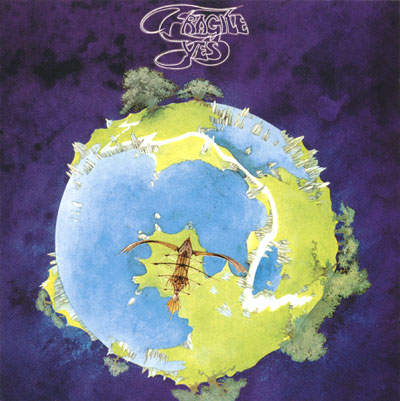 Fragile is the fourth album by the British progressive rock band Yes, released on Atlantic Records, catalogue 7211. It was the band's first album with keyboardist Rick Wakeman after the departure of Tony Kaye, and the first to feature cover art by Roger Dean, his work emblematic of both the band and progressive rock as a whole. Fragile was issued in the UK in November 1971, but was held back in North America for two months because of the chart momentum of The Yes Album. It peaked at #4 on the Billboard 200 during a stay of 46 weeks, and as Atlantic 2401 019 reached #7 in the UK album chart.
Work on the material began while Kaye was still in the band. In a 2006 interview, he said, "I did rehearse Fragile before I left. I left in the middle."[1] Four of the nine tracks feature full performances by the new line-up with Wakeman, three of which were of eight minutes length or longer. Its best known track, "Roundabout," was released in the United States in an edited version as a single. Rick Wakeman contributed to the writing of "South Side of the Sky" and "Heart of the Sunrise" by adding piano interludes to both songs, but wasn't credited due to contractual conflicts. He was instead promised more money by Atlantic studio executives, which he claims he never saw.
The remaining five tracks showcase the band members' individual talents. "Cans and Brahms" is an arrangement by Wakeman of the third movement from the Fourth Symphony in E minor by Johannes Brahms, his utilization of synthesizers adapted to classical works in vogue at the time, evidenced in efforts by Wendy Carlos and Isao Tomita. "We Have Heaven" is by Jon Anderson in which he sings all the vocal parts, a technique later used on his solo album Olias of Sunhillow. Bill Bruford's "Five Per Cent for Nothing" derives its instrumental passages from the rhythm line, while "The Fish" and "Mood for a Day" serve almost entirely as bass and guitar solo pieces for Chris Squire and Steve Howe, respectively.
Side one"Roundabout" (Anderson/Howe) – 8:30 "Cans and Brahms (Extracts from
Brahms' 4th Symphony in E Minor, Third Movement)" (Brahms, arranged Wakeman) –
1:38 "We Have Heaven" (Anderson) – 1:40 "South Side of the Sky"
(Anderson/Squire) – 8:02
Side two"Five Per Cent for Nothing" (Bruford) – 0:35 "Long Distance
Runaround" (Anderson) – 3:30 "The Fish (Schindleria Praematurus)" (Squire) –
2:39 "Mood for a Day" (Howe) – 3:00 "Heart of the Sunrise"
(Anderson/Squire/Bruford) – 11:27
DOWNLOAD
006 BRIAN ENO-ANOTHER GREEN WORLD
 Another Green World is the third studio album by British musician Brian Eno. Produced by Eno, it was originally released by Island Records in September of 1975. As he had done with previous solo albums, Eno worked with several guest musicians including Phil Collins, John Cale and Robert Fripp. The album marked a great musical change from Eno's previous albums. Using his instruction cards the Oblique Strategies for guidance, the album contained less lyric-based rock songs and had stronger emphasis on instrumental productions; many without the aid of guest musicians. The dark humor of the lyrics also changed to more dreamlike and addled songs.
The album failed to chart in the United States or the United Kingdom. Initial critical reception met with both high praise from several critics, but also with negative reviews feeling the album was a to great of a departure from Eno's previous more rock music based material. Modern reception of Another Green World has been more unanimously positive with critics placing the album on several top albums lists as well as giving the album some of their highest ratings.
002 PINK FLOYD-THE DARK SIDE OF THE MOON
 What exactly led to the almost unspeakable success of this album? There is probably no definite answer, but rather an indeterminate zeitgeist at the time of its release. The Apollo moon missions had just ended in 1972, Nixon had just been re-elected, the anti-war movement was at its peak, the "acid" culture was still thriving, and America was in the throes of a post-60s re-self-assessment and as "polarized" as it had been in quite some time. Most importantly, as was true immediately after the assassination of JFK - when the youth of America was looking for something "upbeat" to "fill the hole," and The Beatles materialized almost magically to fill that void - the youth of America in 1972 was looking for something to latch onto. Dark Side became that "thing," for reasons which may never be understood. Yet even bearing the burden of so powerful a "symbol," Dark Side stands on its own as a musical and production achievement with few equals, either then or since. For prog-rock to become not only cross-musical but cross-cultural was something none of us who were around at the time could ever have conceived of. Yet happen it did. Was it just the "commercial" quality of some of the "songs?" Personally, I doubt it. There was an "experience" in listening to Dark Side in toto that could not be gleaned, even minimally, from hearing "Money" or "Us and Them" on AOR radio. What made it so "special" was that it was a "shared" experience - like the first time we listened to Sgt. Pepper, Electric Ladyland or other "shared" musical experiences in the 60s and early 70s. Ultimately, Dark Side has both a "metaphysical" quality to it - vis-a-vis its place in time - and a broad-based compositional-musical quality that all but defined much of the music of its time. And although one can quibble over its internal flaws (assuming it has any, which I do not believe), or its place in Floyd's oeuvre - especially its alleged "commercial" qualities - it is the very impossibility of pinning down its brilliance that makes it a "masterpiece," and, along with Pepper and Court, one of the three absolutely quintessential albums of the genre.
-progarchives.com
DOWNLOAD
Subscribe to:
Posts (Atom)
About Me

- winston
- A Beatles fan since December 1980.Now an oral surgeon and music journalist.He lives in Bangkok.


