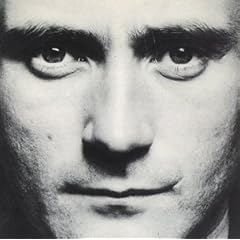
Regardless of how much criticism Phil Collins has received over the years for his solo career and for "what he did to Genesis", serious music listeners know better, & there's simply no denying that his solo debut "Face Value", which came out in early 1981, is a masterpiece. It's an album that makes good on the theory that an artist does their best work in times of personal turmoil. Phil simply began 'fooling around' as a means to comfort himself in the wake of a painful divorce. Apart from a cover of the Beatles' "Tomorrow Never Knows" & a retooling of the Genesis song "Behind the Lines", Phil wrote everything here himself, & not only is his songwriting consistently terrific, but you also get a healthy dose of eclecticism. That said, this ain't some run-of-the-mill soft rock or adult contemporary album. Even with all the brilliant songs Phil has written over the course of his career, the first track here, "In the Air Tonight", remains a signature song that's perhaps his most enduringly popular, & for good reason. Although the idea of suddenly switching from a very quiet part to an ear-blastingly loud part was not a new one, the song is staggeringly powerful & was a very innovative production, containing ominous drum machine, creepy synth, atmospheric Fender Rhodes, vocoder, violins, smoky electric guitar, (played by long-time Collins & Genesis cohort Daryl Steurmer), heavily echoing vocals, & of course, those ferocious, booming gated drums. Add to that the haunting lyrics & melody, & Phil`s passionate, tormented wailing on the fade, & you get one of the most cathartic songs ever recorded. But the genius doesn't stop there. Side 1 of the album (i.e. the first six tracks in its vinyl release) is often very quiet, such as on the starkly affecting "The Roof Is Leaking" which seems to be about the hardships of a family living in the US in the mid 1800s, & has Phil's vocals backed by just piano, banjo, & slide guitar. The wistful "This Must Be Love" is a wonderful, mellow love song with excellent backing vocals from Stephen Bishop, whom Phil was a great admirer of--he even slips the phrase "never letting go" into the song, the title of a Bishop song. He gives a finger-snapping horn-laden treatment to "Behind the Lines", & "The Roof Is Leaking" segues into the dramatic, fast paced wordless piece "Droned" which gives way to another instrumental-plus-wordless-chanting track with the feel good "Hand In Hand" (which features a children's chorus). Some pretty adventurous stuff indeed, & not exactly busting with "radio fodder" either--it's easy to see why Phil was surprised at the album's huge commercial success. It seems that "In the Air Tonight" simply captivated the public, & carried the rather uncommercial album. The first song on `side 2' didn't hurt either though--"I Missed Again" was also a hit, & it's a hook-heavy song with bright-sounding horns & containing uncanny, sophisticated chord changes. "You Know What I Mean" is a gorgeously melodic and tender ballad--it segues into the defiant, catchy kiss-off song "Thunder and Lightning", & the following track is the musically & lyrically contemplative "I'm Not Moving", which is yet another gem. The extremely sad, but hopeful love song "If Leaving Me Is Easy" is terrifically soothing --it has atmospheric strings, Fender Rhodes, & high falsetto vocals from Collins--rarely would you hear Collins' voice get this high on record ever again after this album. He then gets psychedelic for "Tomorrow Never Knows"--it's a terrific version, slower than the Beatles version, & has ominous looping drums, & great, punchy Collins vocals. Phil tacks on a brief reprise of him singing "Over the Rainbow"--apparently, this, along with covering "Tomorrow Never Knows" in the first place, were done as a tribute to John Lennon, who died in the same time period that the album was being completed. The production of this album, by Collins and assisted by Hugh Padgham, is masterful & supremely tasteful, & in the end, this album is truly timeless. Phil puts himself into the recording, & he ends up with an album that's oozing with deep feeling and is all the better for it--"Face Value" is a brilliant album from one of the finest artists of all time. Although this CD version is not an "original recording remastered" version of the album, the sound quality is still truly excellent, a testament to how well it was originally recorded. I highly encourage you not just to get this album (if you don't already) since it's absolutely essential, but also the "Face Value" DVD that's part of the "Classic Albums" series--it prominently features Phil himself, including performances from him, & it's a terrific look at the making of this incredible work of art.
Showing posts with label ROCK. Show all posts
Wednesday, April 22, 2009
043 U2-NO LINE ON THE HORIZON
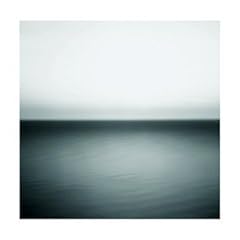
The Irish band's 12th studio album was originally slated to come out before the end of last year, but the band pulled it back to mold and twist it some more, after the original material recorded with Rick Rubin was shelved. They've been rocking since the early 80s, when it comes to stadium-filling anthems, there's no challenger to U2's crown. It's been a while since their last release, 2004's "How To Dismantle An Atomic Bomb", but it's been worth the wait. The result is 11 songs that thematically seem to have no link (although being lost surfaces quite a few times), but sonically unite the many sides of U2: the boys from get back to basics with their strongest offering in years. It was recorded in Dublin, New York, London and Fès, Morocco (but the rumoured North African influences are hardly audible). Comfortingly, the production comes courtesy of Brian Eno, Daniel Lanois and Steve Lillywhite. There may be some quibble as to whether this is the best U2 album since Eno and Lanois first worked with the band on 1984's "The Unforgettable Fire". It starts out blustery and familiar, before gradually revealing an unexpected and almost lovable sense of vulnerability. "Magnificent" with its drum crescendos, trademark guitar riffs and a soaring Bono vocal is easily the best thing here and is crying out to be released as a single. There is the odd moment of rocking swagger which seems to be U2's way of saying that they are not too old to pull on the leather trousers yet - the trashy rock of "Get On Your Boots" and "Stand Up Comedy", the latter hinting at the muscular funk-infused rock of the Red Hot Chili Peppers. "Get On Your Boots", the album's lead single, is actually a good track : if this fails to get your foot tapping, we doubt anything will. "Breathe" suggests that the band's classic approach can still sound contemporary. And the albums ends in contemplative mood with "Cedars Of Lebanon", a Lanois-style soundscape, which takes shape amid a sonic fug that mirrors the exhaustion of its war reporter narrator: "Child drinking dirty water from the riverbank/ Soldier brings oranges he got out from a tank". "Breathe" suggests that the band's classic approach can still sound contemporary. Lyrics like 'the right to appear ridiculous is something I hold dear' on "I'll Go Crazy If I Don't Go Crazy Tonight" show that they still have a sense of humour. Apart from a couple of the tracks being a bit too long and the album cover being a bit boring, the album - over 54 minutes - is a worthy addition to their catalogue. "No Line on the Horizon is a bold, beautiful and highly speculative re-imagining of U2's music". - Telegraph "The slower, meditative efforts where Bono sings rather than screams are surprisingly lovely and hint at a future of Rubin-era Johnny Cash potential. U2 are at their strongest when they play their age but when they try and rock, it's irrelevant and cringeworthy".- L. Bazley
Monday, March 23, 2009
041 JIMI HENDRIX EXPERIENCE- ARE YOU EXPERIENCED
One of the most stunning debuts in rock history, and one of the definitive albums of the psychedelic era. On Are You Experienced?, Jimi Hendrix synthesized various elements of the cutting edge of 1967 rock into music that sounded both futuristic and rooted in the best traditions of rock, blues, pop, and soul. It was his mind-boggling guitar work, of course, that got most of the ink, building upon the experiments of British innovators like Jeff Beck and Pete Townshend to chart new sonic territories in feedback, distortion, and sheer volume. It wouldn't have meant much, however, without his excellent material, whether psychedelic frenzy ("Foxey Lady," "Manic Depression," "Purple Haze"), instrumental freak-out jams ("Third Stone From the Sun"), blues ("Red House," "Hey Joe"), or tender, poetic compositions ("The Wind Cries Mary") that demonstrated the breadth of his songwriting talents. Not to be underestimated were the contributions of drummer Mitch Mitchell and bassist Noel Redding, who gave the music a rhythmic pulse that fused parts of rock and improvised jazz. Many of these songs are among Hendrix's very finest; it may be true that he would continue to develop at a rapid pace throughout the rest of his brief career, but he would never surpass his first LP in terms of consistently high quality. The British and American versions of the album differed substantially when they were initially released in 1967; MCA's 17-song CD reissue does everyone a favor by gathering all of the material from the two records in one place, adding a few B-sides from early singles as well. -ALLMUSIC.COM
BUY Are You Experienced AT BEST PRICE NOW!
Sunday, March 8, 2009
038 Coldplay-Viva La Vida or Death and all His Friends
Gone are Chris Martin's piano recitals and gone are the washes of meticulously majestic guitar, replaced by orchestrations of sound, sometimes literally consisting of strings but usually a tapestry of synthesizers, percussion, organs, electronics, and guitars that avoid playing riffs. Gone too are simpering schoolboy ballads like "Fix You," and along with them the soaring melodies designed to fill arenas. In fact, there are no insistent hooks to be found anywhere on Viva la Vida, and there are no clear singles in this collection of insinuatingly ingratiating songs.
This reliance on elliptical melodies isn't off-putting — alienation is alien to Coldplay — and this is where Eno's guidance pays off, as he helps sculpt Viva la Vida to work as a musical whole, where there are long stretches of instrumentals and where only "Strawberry Swing," with its light, gently infectious melody and insistent rhythmic pulse, breaks from the album's appealingly meditative murk. Whatever iciness there is to the sound of Viva la Vida is warmed by Martin's voice, but the music is by design an heir to the earnest British art rock of '80s Peter Gabriel and U2 — arty enough to convey sober intelligence without seeming snobby, the kind of album that deserves to take its title from Frida Kahlo and album art from Eugene Delacroix. That Delacroix painting depicts the French Revolution, so it does fit that Martin tones down his relentless self-obsession — the songs aren't heavy on lyrics and some are shockingly written in character — which is a development as welcome as the expanded sonic palette. Martin's refined writing topics may be outpaced by the band's guided adventure, but they're both indicative that Coldplay are desperate to not just strive for the title of great band — a title they seem to believe that they're to the manor born — but to actually burrow into the explorative work of creating music. And so the greatest thing Coldplay may have learned from Eno is his work ethic, as they demonstrate a focused concentration throughout this tight album — it's only 47 minutes yet covers more ground than X&Y and arguably A Rush of Blood to the Head — that turns Viva la Vida into something quietly satisfying.
Download
Friday, March 6, 2009
035 JACKSON BROWNE-THE PRETENDER
This is an impressive record, but a lot of the time I hate it; my grade is an average, not a judgment. Clearly Jon Landau has gotten more out of Browne's voice than anyone knew was there, and the production jolts Ol' Brown Eyes out of his languor again and again. But languor is Browne's best mask, and what's underneath isn't always so impressive. The shallowness of his kitschy doomsaying and sentimental sexism is well-known, but I'm disappointed as well in his depth of craft. How can apparently literate people mistake a received metaphor like "sleep's dark and silent gate" for interesting poetry or gush over a versifier capable of such rhyming dictionary pairings as "pretender" and "ice cream vendor" (the colloquial term, JB, is "ice cream man")? Similar shortcomings flaw the production itself--the low-register horns on "Daddy's Tune" complement its somber undertone perfectly, but when the high blare kicks in at the end the song degenerates into a Honda commercial. Indeed, at times I've wondered whether some of this isn't intended as parody, but a sense of humor has never been one of Browne's virtues. B
-ROBERT CHRISTGAU
Labels:
1976,
70'S,
JACKSON BROWNE,
ROCK,
SINGER-SONGWRITER,
THE PRETENDER,
WEST COAST
Thursday, March 5, 2009
032 GREG LAKE-GREG LAKE
Greg Lake is the self-titled debut solo album of singer Greg Lake, released in 1981. It features ex-Thin Lizzy member Gary Moore on guitar, and the song "Love You Too Much" co-written with Bob Dylan.-WIKIPEDIA
More Greg Lake and ELP
031 GEORGE HARRISON-CLOUD NINE
DOWNLOAD
More George and Beatles
Wednesday, March 4, 2009
027 KEANE-HOPES AND FEARS
Hopes and Fears is the debut album by English rock band Keane and was released on May 10, 2004 in the United Kingdom. It topped the UK album charts upon release, was the best selling British album of 2004, and has since gone eight times platinum. It returned to the top of the charts after winning a BRIT Award for Best Album in February 2005. With almost six million copies sold, it has been ranked the 16th biggest-selling album of the millennium so far in the UK.-WIKIPEDIA
024 ABC-THE LEXICON OF LOVE
The Lexicon of Love is the acclaimed chart topping debut album by the British pop band ABC, released in 1982. It is a concept album in which the singer experiences heartache as he tries and fails to have a meaningful relationship. It was produced by Trevor Horn and featured orchestration by future Art of Noise member Anne Dudley.
Most of the production team and sessions players listed below would form the basis for the ZTT label, and their work with Horn meant all concerned would be in constant demand throughout the industry in years to come. "Tears Are Not Enough" (in its initial release produced by Steve Brown), "All of My Heart", "Poison Arrow", and "The Look of Love (Part One)" were all Top 20 hits in the UK; the last two also charted in the US, peaking at #25 and #14 respectively. The album reached #1 on the British charts, and peaked at #24 in the U.S. charts.
In 2004, a deluxe 2-disc reissue including outtakes and early demos and a live performance of the album from 1982 was released on the Neutron label.
In 1998, Q magazine readers voted The Lexicon of Love the 92nd greatest album of all time. In 2000 the same magazine placed it at number 40 in its list of the 100 Greatest British Albums Ever.
The woman who says "Goodbye" in "The Look of Love (Part One)" is the woman who dumped Martin Fry and this album is about his feelings of outrage about it. The idea of getting her to do that part of the song came from producer Trevor Horn-WIKIPEDIA
Labels:
1982,
80'S,
ABC,
NEW ROMANTIC,
POP,
ROCK,
THE LEXICON OF LOVE,
TREVOR HORN
Tuesday, March 3, 2009
018 JOHN LENNON-IMAGINE
DOWNLOAD
Monday, March 2, 2009
017 ERIC CLAPTON-CROSSROADS
Including both his band work (with the Yardbirds, John Mayall's Blues Breakers, Cream, Blind Faith, Delaney and Bonnie, and Derek and the Dominos) and his long, varied solo career, this four-CD set does a spectacular job in gathering several decades' worth of Clapton's best. There are the requisite classics--"Layla," "Blues Power," "After Midnight," "Further On Up the Road," "Crossroads," and "I Shot the Sheriff," among many others--some of them in previously unreleased live or alternate studio recordings. Released in 1988, when only superstars were granted the box set, Crossroads became the blueprint for what such a retrospective should be. For its scope, this box skims the cream of Clapton's large output. --Daniel Durchholz
Labels:
60'S,
70'S,
80'S,
BLUES,
BOXSET,
CROSSROADS,
ERIC CLAPTON,
POP,
ROCK
012 FLEETWOOD MAC-RUMOURS (DELUXE EDITION)
With the pop sense of Lindsey Buckingham and Stevie Nicks now leading the band, Fleetwood Mac moved completely away from blues and created this homage to love, Southern California-style. Each songwriter makes his or her presence known: Nicks for her dreamy, mystical reveries ("Dreams," "Gold Dust Woman:); Christine McVie for her ultra-catchy slogans ("Don't Stop"); and Buckingham for his deceptively simple pop songs ("Second Hand News," "Go Your Own Way"). "The Chain," written collectively, is the Mac at their most dramatic. But it's the ensemble playing, the elastic rhythms, and lush harmonies that transform the material into classic FM fare. --Rob O'Connor amazon.com
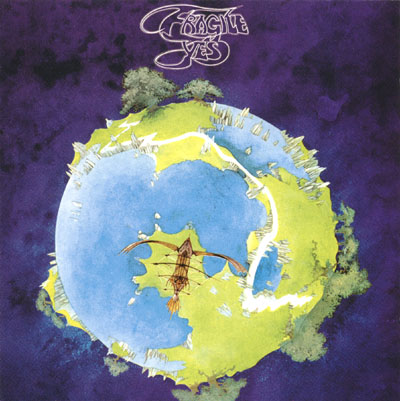
009 YES-FRAGILE
Work on the material began while Kaye was still in the band. In a 2006 interview, he said, "I did rehearse Fragile before I left. I left in the middle."[1] Four of the nine tracks feature full performances by the new line-up with Wakeman, three of which were of eight minutes length or longer. Its best known track, "Roundabout," was released in the United States in an edited version as a single. Rick Wakeman contributed to the writing of "South Side of the Sky" and "Heart of the Sunrise" by adding piano interludes to both songs, but wasn't credited due to contractual conflicts. He was instead promised more money by Atlantic studio executives, which he claims he never saw.
The remaining five tracks showcase the band members' individual talents. "Cans and Brahms" is an arrangement by Wakeman of the third movement from the Fourth Symphony in E minor by Johannes Brahms, his utilization of synthesizers adapted to classical works in vogue at the time, evidenced in efforts by Wendy Carlos and Isao Tomita. "We Have Heaven" is by Jon Anderson in which he sings all the vocal parts, a technique later used on his solo album Olias of Sunhillow. Bill Bruford's "Five Per Cent for Nothing" derives its instrumental passages from the rhythm line, while "The Fish" and "Mood for a Day" serve almost entirely as bass and guitar solo pieces for Chris Squire and Steve Howe, respectively.
Side one"Roundabout" (Anderson/Howe) – 8:30 "Cans and Brahms (Extracts from
Brahms' 4th Symphony in E Minor, Third Movement)" (Brahms, arranged Wakeman) –
1:38 "We Have Heaven" (Anderson) – 1:40 "South Side of the Sky"
(Anderson/Squire) – 8:02
Side two"Five Per Cent for Nothing" (Bruford) – 0:35 "Long Distance
Runaround" (Anderson) – 3:30 "The Fish (Schindleria Praematurus)" (Squire) –
2:39 "Mood for a Day" (Howe) – 3:00 "Heart of the Sunrise"
(Anderson/Squire/Bruford) – 11:27
DOWNLOAD
006 BRIAN ENO-ANOTHER GREEN WORLD
Another Green World is the third studio album by British musician Brian Eno. Produced by Eno, it was originally released by Island Records in September of 1975. As he had done with previous solo albums, Eno worked with several guest musicians including Phil Collins, John Cale and Robert Fripp. The album marked a great musical change from Eno's previous albums. Using his instruction cards the Oblique Strategies for guidance, the album contained less lyric-based rock songs and had stronger emphasis on instrumental productions; many without the aid of guest musicians. The dark humor of the lyrics also changed to more dreamlike and addled songs.The album failed to chart in the United States or the United Kingdom. Initial critical reception met with both high praise from several critics, but also with negative reviews feeling the album was a to great of a departure from Eno's previous more rock music based material. Modern reception of Another Green World has been more unanimously positive with critics placing the album on several top albums lists as well as giving the album some of their highest ratings.
003 LED ZEPPELIN-BBC SESSIONS
Frequently bootlegged and now digitally remastered by Jimmy Page, these tapes capture a 25-month (1969 to 1971) arc in which Zep's sound grew to encompass the speed rush and jazz/blues festival stuff of their 1969 debut, the fully developed folkie musings of "Going to California" (in which Plant vowed to make a hejira right up to Joni Mitchell's front door), and the band's modestly popular multilayered epic "Stairway to Heaven." The Sessions also give a glimpse of nearly off-the-cuff invention in an intense take on Robert Johnson's "Traveling Riverside Blues." Most other white blues musicians would've rushed to get this on vinyl; Page and Plant instead used it for parts, most notably taking its profound acoustic freneticism for Led Zeppelin III. --Rickey Wright amazon.com
001 THE BEATLES - SGT. PEPPER'S LONELY HEARTS CLUB BAND (MFSL VERSION)
Issued in Britain on June 1st, 1967, and a day later in America,Sgt. Pepper's Lonely Hearts Club Band is also rock's ultimate declaration of change. For the Beatles, it was a decisive goodbye to matching suits, world tours and assembly-line record-making. "We were fed up with being Beatles," McCartney said decades later, in Many Years From Now, Barry Miles' McCartney biography. "We were not boys, we were men . . . artists rather than performers."
At the same time, Sgt. Pepper formally ushered in an unforgettable season of hope, upheaval and achievement: the late 1960s and, in particular, 1967's Summer of Love. In its iridescent instrumentation, lyric fantasias and eye-popping packaging, Sgt. Pepper defined the opulent revolutionary optimism of psychedelia and instantly spread the gospel of love, acid, Eastern spirituality and electric guitars around the globe. No other pop record of that era, or since, has had such an immediate, titanic impact. This music documents the world's biggest rock band at the very height of its influence and ambition. "It was a peak," Lennon confirmed in his 1970 Rolling Stone interview, describing both the album and his collaborative relationship with McCartney. "Paul and I definitely were working together," Lennon said, and Sgt. Pepper is rich with proof: McCartney's burst of hot piano and school-days memoir ("Woke up, fell out of bed . . . ") in Lennon's "A Day in the Life," a reverie on mortality and infinity; Lennon's impish rejoinder to McCartney's chorus in "Getting Better" ("It can't get no worse").
"Sgt. Pepper was our grandest endeavor," Starr said, looking back, in the 2000 autobiography The Beatles Anthology. "The greatest thing about the band was that whoever had the best idea - it didn't matter who -- that was the one we'd use. No one was standing on their ego, saying, 'Well, it's mine,' and getting possessive." It was Neil Aspinall, the Beatles' longtime assistant, who suggested they reprise the title track, just before the grand finale of "A Day in the Life," to complete Sgt. Pepper's theatrical conceit: an imaginary concert by a fictional band, played by the Beatles.
The first notes went to tape on December 6th, 1966: two takes of McCartney's music-hall confection "When I'm Sixty-Four." (Lennon's lysergic reflection on his Liverpool childhood, "Strawberry Fields Forever," was started two weeks earlier but issued in February 1967 as a stand-alone single.) But Sgt. Pepper's real birthday is August 29th, 1966, when the Beatles played their last live concert, in San Francisco. Until then, they had made history in the studio -- Please Please Me (1963), Rubber Soul (1965), Revolver (1966) -- between punishing tours. Off the road for good, the Beatles were free to be a band away from the hysteria of Beatlemania. McCartney went a step further. On a plane to London in November '66, as he returned from a vacation in Kenya, he came up with the idea of an album by the Beatles in disguise, an alter-ego group that he subsequently dubbed Sgt. Pepper's Lonely Hearts Club Band. "We'd pretend to be someone else," McCartney explained in Anthology. "It liberated you -- you could do anything when you got to the mike or on your guitar, because it wasn't you."
Only two songs on the final LP, both McCartney's, had anything to do with the Pepper character: the title track and Starr's jaunty vocal showcase "With a Little Help From My Friends," introduced as a number by Sgt. Pepper's star crooner, Billy Shears. "Every other song could have been on any other album," Lennon insisted later. Yet it is hard to imagine a more perfect setting for the Victorian jollity of Lennon's "Being for the Benefit of Mr. Kite!" (inspired by an 1843 circus poster) or the sumptuous melancholy of McCartney's "Fixing a Hole," with its blend of antique shadows (a harpsichord played by the Beatles' producer George Martin) and modern sunshine (double-tracked lead guitar executed with ringing precision by Harrison). The Pepper premise was a license to thrill.
It also underscored the real-life cohesion of the music and the group that made it. Of the 700 hours the Beatles spent making Sgt. Pepper (engineer Geoff Emerick actually tallied them) from the end of 1966 until April 1967, the group needed only three days' worth to complete Lennon's lavish daydream "Lucy in the Sky With Diamonds." "A Day in the Life," the most complex song on the album, was done in just five days. (The oceanic piano chord was three pianos hit simultaneously by ten hands belonging to Lennon, McCartney, Starr, Martin and Beatles roadie Mal Evans.) No other Beatles appear with Harrison on his sitar-perfumed sermon on materialism and fidelity, "Within You Without You," but the band wisely placed the track at the halfway point of the original vinyl LP, at the beginning of Side Two: a vital meditation break in the middle of the jubilant indulgence.
The Beatles' exploitation of multitracking on Sgt. Pepper transformed the very act of studio recording (the orchestral overdubs on "A Day in the Life" marked the debut of eight-track recording in Britain: two four-track machines used in sync). And Sgt. Pepper's visual extravagance officially elevated the rock album cover to a Work of Art. Michael Cooper's photo of the Beatles in satin marching-band outfits, in front of a cardboard-cutout audience of historical figures, created by artist Peter Blake, is the most enduring image of the psychedelic era. Sgt. Pepper was also the first rock album to incorporate complete lyrics to the songs in its design.
Yet Sgt. Pepper's Lonely Hearts Club Band is the Number One album of the RS 500 not just because of its firsts -- it is simply the best of everything the Beatles ever did as musicians, pioneers and pop stars, all in one place. A 1967 British print ad for the album declared, "Remember Sgt. Pepper's Lonely Hearts Club Band Is the Beatles." As McCartney put it, the album was "just us doing a good show."
The show goes on forever.
-Rolling Stone,2003
DOWNLOAD
Subscribe to:
Posts (Atom)
About Me
- winston
- A Beatles fan since December 1980.Now an oral surgeon and music journalist.He lives in Bangkok.