Showing posts with label ALTERNATIVE ROCK. Show all posts

Wednesday, March 25, 2009

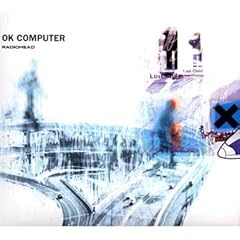
042 RADIOHEAD-OK COMPUTER (COLLECTOR'S EDITION)


OK Computer is the third album by the English alternative rock band Radiohead, released on 16 June 1997. Radiohead recorded the album in rural Oxfordshire and Bath, during 1996 and early 1997, with producer Nigel Godrich. Although most of the music is dominated by guitar, OK Computer's expansive sound and wide range of influences set it apart from many of the Britpop and alternative rock bands popular at the time, and it laid the groundwork for Radiohead's later, more experimental work. Radiohead do not consider OK Computer a concept album; however, its lyrics and visual artwork emphasise common themes such as consumerism, social disconnection, political stagnation and modern malaise.
OK Computer reached number one on the UK Albums Chart and marked Radiohead's highest entry into the American market at the time, debuting at number 21 on the Billboard 200. The album expanded the band's worldwide popularity, and has been certified triple platinum in the UK, double platinum in the US, and platinum in Australia. OK Computer received considerable attention and acclaim at the time of its release, and has since been considered by music critics and listener polls as one of the greatest albums ever recorded.


BUY OK Computer [COLLECTOR'S EDITION- 2 CDs]

Sunday, March 8, 2009

037 ROBERT PLANT ALISON KRAUSS - RAISING SAND

Perhaps only the fantasy duo of King Kong and Bambi could be a more bizarre pairing than Robert Plant and Alison Krauss. Yet on Raising Sand, their haunting and brilliant collaboration, the Led Zeppelin screamer and Nashville's most hypnotic song whisperer seem made for each other. This, however, is not the howling Plant of "Whole Lotta Love," but a far more precise and softer singer than even the one who emerged with Dreamland (2002). No matter that Plant seems so subdued as to be on downers, for that's one of the keys to this most improbable meeting of musical galaxies--almost all of it seems slowed down, out of time, otherworldly, and at times downright David Lynch-ian, the product of an altered consciousness. Yet probably the main reason it all works so well is the choice of producer T Bone Burnette, the third star of the album, who culled mostly lesser-known material from some of the great writers of blues, country, folk, gospel, and R&B, including Tom Waits, Townes Van Zandt, Milt Campbell, the Everly Brothers, Sam Phillips, and A.D. and Rosa Lee Watson. At times, Burnette's spare and deliberate soundscape--incisively crafted by guitarists Marc Ribot and Norman Blake, bassist Dennis Crouch, drummer Jay Bellerose, and multi-instrumentalist Mike Seeger, among others--is nearly as dreamy and subterranean as Daniel Lanois's work with Emmylou Harris (Wrecking Ball). Occasionally, Burnette opts for a fairly straightforward production while still reworking the original song (Plant's own "Please Read the Letter," Mel Tillis's "Stick with Me, Baby"). But much of the new flesh on these old bones is oddly unsettling, if not nightmarish. On the opening track of "Rich Woman," the soft-as-clouds vocals strike an optimistic mood, while the instrumental backing--loose snare, ominous bass line, and insinuating electric guitar lines--create a spooky, sinister undertow. Plant and Krauss trade out the solo and harmony vocals, and while they both venture into new waters here (Krauss as a mainstream blues mama, Plant as a gospel singer and honkytonker), she steals the show in Sam Phillips' new "Sister Rosetta Goes Before Us," where a dramatic violin and tremulous banjo strike a foreboding gypsy tone. When Krauss begins this strange, seductive song in a voice so ethereal that angels will take note, you may stop breathing. That, among other reasons, makes Raising Sand an album to die for. --Alanna Nash

DOWNLOAD

Thursday, March 5, 2009

030 DIRE STRAITS-DIRE STRAITS


Despite initial misgivings, I've found this thoughtful and sexy. The decisive touch is how Mark Knopfler counterpoints his own vocals on guitar--only a musician with a real structural knack could sound like two people that way. But there's a streak of philistine ideology here that speaks for too many white r&b players these days--most of them can't be bothered articulating it, that's all. In "In the Gallery," an honest sculptor has his bareback rider, coal miner, and skating ballerina rejected by the "trendy boys," "phonies," and "fakes" who (literally) conspire together and "decide who gets the breaks." Those who find this rather simplistic should now ask themselves whether Knopfler's beloved Sultans of Swing--not to mention Dire Straits--have more in common with that sculptor than he suspects. B -Robert Christgau

DOWNLOAD BY THE WATERLINE


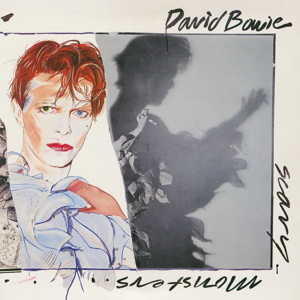
029 DAVID BOWIE-SCARY MONSTERS (AND SUPER CREEP)

David Bowie returned to relatively conventional rock & roll with Scary Monsters, an album that effectively acts as an encapsulation of all his '70s experiments. Reworking glam rock themes with avant-garde synth flourishes, and reversing the process as well, Bowie creates dense but accessible music throughout Scary Monsters. Though it doesn't have the vision of his other classic records, it wasn't designed to break new ground — it was created as the culmination of Bowie's experimental genre-shifting of the '70s. As a result, Scary Monsters is Bowie's last great album. While the music isn't far removed from the post-punk of the early '80s, it does sound fresh, hip, and contemporary, which is something Bowie lost over the course of the '80s. [Rykodisc's 1992 reissue includes re-recorded versions of "Space Oddity" and "Panic in Detroit," the Japanese single "Crystal Japan," and the British single "Alabama Song."] -ALLMUSIC.COM

DOWNLOAD 1
DOWNLOAD 2

028 ARCTIC MONKEYS-WHATEVER PEOPLE SAY I AM THAT'S WHAT I'M NOT

On Monday, the Arctic Monkeys sold 118,501 copies of their debut album in the UK, more than the rest of the top 20 combined. It's a startingly high figure not just because they're set to be the Biggest New Band Since Oasis but because of the speed with which they've gatecrashed their nation's public consciousness, going from unknown indie band to No. 1 on the singles charts in roughly six months. Much of the credit for that quick rise is rightly given to the power of the internet: The then-unsigned band first caught the public ear when its demos circulated last year. The Sheffield quartet eventually signed with Domino and the label wisely hosted the buzzmaking tracks, a move that allowed anticipation for the group's studio recordings to spread rather than stall. Two No. 1 singles, a few breathless reviews, and a load of thinkpieces about how The Internet Will Change Music Forever later and in the UK the Arctic Monkeys are suddenly the biggest band of the decade.

It would be nice to think that a democratized music industry would mean the kids are tossing up alternatives to what they're already getting, but the Arctic Monkeys are, at their heart, the same sort of meat'n'potatoes guitar rock that has dominated the UK since the emergence of the Strokes, if not Oasis. They're a band that neatly sums up what's already selling, and in a relatively condensed media market the group was always going to be a hit; what's changed is that they were pegged quickly, mainlined to their target market and the UK mainstream press and radio for six months, then called an organic success story. (America, don't get smug: Your biggest download success to date is "My Humps".) And context still matters: When Oasis or the Strokes rolled into town, they were breaths of fresh air, antidotes to a lack of swagger or hooks or artists who wanted and deserved to be rock stars; Arctic Monkeys are yet another in a string of buzzsaw guitar bands with Northern accents.

What's meant to be different about them are sometimes keenly expressive lyrics and that irresistible backstory. The band's more starry-eyed backers compare their hardscrabble tales to those of predecessors such as the Specials, Smiths, Pulp, and the Streets. But wringing lyrics from the everyday or articulating the dissatisfaction of many is risky and difficult business and, unlike those listed above, the Monkeys aren't so much spinning deft tales of quotidian anxiety as just complaining about their first steps into nightlife, run-ins with bouncers, cops, and schoolmates. So they're the UK's emo, painting diaristic portraits of small-town and suburban life for teens in a country where fundamentalism is allegiance to a soccer club rather than religion.

Hey, fair play to them-- first steps into nightlife, run-ins with bouncers, cops, and schoolmates, these should be the worries in their lives, and of their peers they're among the best at addressing them. Almost everything that's appealing about Arctic Monkeys is down to singer Alex Turner, who possesses a gritty voice that gets increasingly appealing the more he allows it to stretch and wander. On sharp, observational, and detail-heavy Saturday Night and Sunday Morning tracks like the "Red Lights Indicate Doors Are Secure", "Mardy Bum", and "Riot Van" the band justifies taking their album name from the kitchen-sink drama. (Though it's still terrible-- alas, Don't Let the Bastards Get You Down was already taken). Outside of naming their record, when the band stumbles it's typically when they're fumbling around with women ("Dancing Shoes", "Still Take You Home") or complaining about the onset of fame (the dreadful "Perhaps Vampires Is a Bit Strong But...").

The singles are a mixed bag. The Five Minutes With... EP's "Fake Tales of San Francisco" is a witty call to arms, a plea for bands that say something about their lives, but "From the Ritz to the Rubble"'s whining almost makes you want to side with the bouncers. Of the Monkeys' starmaking tracks, neither sounds like a No. 1, let alone the first sounds from a burgeoning sensation: "I Bet You Look Good on the Dancefloor" grates every other time I listen to it; better is the offbeat "When the Sun Goes Down", the only track here that's three-dimensional structurally as well as lyrically. Should the band release album closer "A Certain Romance" as its next single, the hit/miss ratio will be greatly improved. A long sigh about living among chavs, "Romance" finds the Monkeys moving between bloody-knuckled and wistful as they paint a picture of boredom breeding violence, of being aware of the faults and faultlines in their environment but feeling too powerless or hemmed in by loyalty to raise a fuss. It's a neat summation of both the band's m.o. and a teenage life characterized by existential drift and geographic claustrophobia.

And in the end then this is about teenage life-- and a pretty specific type of teenage life at that. NME editor Conor McNicholas told The Guardian last year that "there's a big sofa supermarket by Doncaster train station. I always look at it and think someone's got a Saturday job there, they're 17, they're stuck in Doncaster and they fucking hate it-- that's the person we're publishing for." I'd guess that to a disaffected, chavbaiting 17-year-old from Doncaster (or Rotherham, or Hull...) this is the perfect soundtrack to moving loveseats around a stock room. Fittingly then the NME awarded this album a 10/10. To the rest of us, however, the album is at times charming, oddly affecting, and certainly promising but understandably something less than life changing.

- Scott Plagenhoef, January 25, 2006 (PITCHFORKMEDIA)

DOWNLOAD
Monday, March 2, 2009

013 STEVE HOWE-THE STEVE HOWE ALBUM

DOWNLOAD
Steve Howe's second solo effort is his most essential recording. The Steve Howe Album contains many of Howe's strongest and most original compositions. Whereas some of his albums can be associated with the sound of the bands in which he's played, this release is unique. Howe places himself in a country/bluegrass setting on most of the compositions, and that is what makes this project so appealing — he's a rock veteran venturing outside of his field. And with Graham Preskett playing violin on "The Continental," Howe turns in what sounds like a real hoedown. The first track, "Pennants," is a gem for the more rock-oriented fan. The cut opens with the sweet, resonant, rocking sounds of Howe's Fender Telecaster; he then adds mandolin and a pervasive twin-neck steel, while drummer Alan White keeps it all rhythmic. Half of the tracks are played by Howe alone, most notably "Surface Tension," his composition for solo Spanish guitar. Other cuts feature former Yes-mates White, Bill Bruford, and Patrick Moraz (all of whom participated on Howe's first solo album), and Claire Hamill, who sings beautifully on "Look Over Your Shoulder." Only one other cut includes vocals: "All's a Chord," on which Howe's singing is awkward but appealing. The song, comprised of several movements and musical styles (including classical), features Howe on eight different stringed instruments, including bass, pedal steel, sitar, banjo, mandolin, and his trademark deep-bodied electric-acoustic Gibson ES 175 D. The final two pieces are set apart from the rest of the recordings. On both compositions, equipped only with his Gibson Les Paul, Howe is accompanied by a string ensemble on his interpretation of Vivaldi's Concerto in D, Second Movement, and by a 59-piece orchestra on "Double Rondo." Andrew Jackman (who served as orchestrator and conductor on Chris Squire's Fish Out of Water several years earlier) conducts. The Steve Howe Album is a culmination of everything Howe represents, every genre of music he loves so dearly, exquisitely played and arranged. The inside cover colorfully depicts all the stringed instruments Howe used on the recordings, and Roger Dean's cover painting makes the package complete. The sound quality of the Japanese import compact disc is unsurpassed, incredibly sharp and vibrant. -almusic.com

011 BECK-MUTATIONS


If you've been keeping up with your reading, you've by now ingested a glowing review or two of Beck's latest release, Mutations. No doubt, you've read that he recorded the album's twelve songs in fourteen days after completing the Odelay tour. And surely you know that the album was co-produced by Nigel Godrich, who was at least partially responsible for Radiohead's OK Computer. All this background information was most certainly followed by heaps of praise for the songs on the album and the treatments they get at the hands of Godrich and Beck.

So I'm in a bit of a spot here. How can I tell you something about the album you don't already know? How about this one: it's better than Odelay. Now let me qualify that statement. There are some who will tell you that Beck's last album is a masterwork of late 20th century American culture; I'm not one of them. On that landmark 1996 release, Beck fully realized his oft-heralded command of an unfathomable range of musical genres. It was a fantastically successful album, both financially and musically. But slightly lost in that jumbled collage of sounds and influences was the synergy of the album as a whole. In his efforts to plaster his genius credentials as subtly as a billboard, he failed to create the sense of unity that is a trademark of every true masterpiece. Ultimately, Odelay was a somewhat disjointed collection of great songs.

On Mutations, Beck's traded in his two turntables and microphone for a Moog synth and a copy of the Kinks' Muswell Hillbillies. Here, he fully explores his obsession with the 60s. He's always shared Ray Davies' ear for a tune and flair for the theatrical, but on "Bottle of Blues", he manages to co-opt the old Brit's voice, too. Yet, what makes Beck special is his ability to infuse his own musical identity into the lifted lines. Like Davies' Hillbillies and even Neil Young's Tonight's the Night, Mutations initially flows so easily that it sounds rudimentary. It's that very flow that's missing on Odelay, and subsequent listens reveal the complex details creating it. It's like pressing your nose against an impressionist painting to examine the thousands of meticulously placed brush dabs that make up the seascape.

If the backbone of the album is a string of rootsy melodies-- some of the best Beck has ever penned-- its mood is definitely driven by Godrich's patented pre-millennial assortment of buzzes, bleeps and quirks, giving it the spacy urgency of OK Computer, and leaving us with a beautifully futuristic roots album. A perfect example of this is the addendum to the album's last track, on which dueling lasers fire over a riff swiped off of the Beatles' Revolver.

Unfortunately, with the music biz buzz awaiting the release of Odelay's proper follow-up (due next year), Mutations will most likely be praised and then forgotten. Its low budget, soft-spoken demeanor, and lack of a standout single will surely count against it. For that to happen would be tragic. Beck is clearly working on a level most others can only dream of, and Mutations is proof of that. It seems impossible that his next album could be any better, but I can't wait to find out.

- Neil Lieberman, November 1, 1998 (PITCHFORK)

About Me

My photo
A Beatles fan since December 1980.Now an oral surgeon and music journalist.He lives in Bangkok.